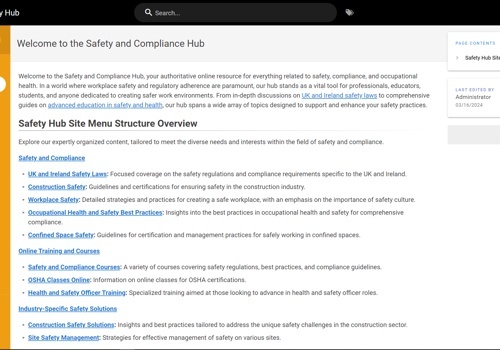
Industry: Construction & Workplace Safety
Built for safety officers and site managers to centralize compliance standards and real-time safety updates.
Problem
Critical safety information was fragmented across multiple sources, making it difficult for personnel to find reliable, up-to-date documentation.
- Information Fragmentation: Safety guidelines and regulatory updates were scattered across various government and private domains.
- Poor Search Visibility: Vital safety resources were not indexed effectively, leading to low discovery rates by the workers who needed them most.
- Scalability Issues: Manually creating a comprehensive library of specialized safety articles was too slow to meet industry demands.
Solution
A multifunctional Wiki portal and automated "Safety Alerts" system featuring a vast library of optimized technical content.
- AI-Generated Knowledge Base: Deployed AI algorithms to produce 350+ comprehensive, high-quality articles covering specific safety protocols and equipment.
- Structured Information Architecture: Developed a logical category tree to ensure intuitive navigation and rapid information retrieval.
- SEO Optimization: Engineered the platform’s metadata and content structure to rank for high-intent safety and compliance search terms.
- Automated Web Scraping: Integrated scraping tools to pull the latest news and regulatory alerts from official sources into a single dashboard.
Tech Stack
- Content Generation: AI algorithms for large-scale, structured technical writing.
- Web Scraping: Automated tools to monitor and extract safety updates from industry-standard sources.
- SEO & Analytics: Advanced optimization frameworks to drive organic search growth and track user engagement.
- Web Infrastructure: Scalable Wiki architecture designed for high-volume content management.
Results
- Dominant Search Presence: Achieved high-ranking positions for critical safety keywords, significantly increasing organic site traffic.
- Centralized Compliance: Provided a "single source of truth" for construction firms, reducing the time spent searching for regulatory guidance.
- Enhanced User Engagement: The intuitive category structure led to higher page-per-session rates and improved user retention.
- Rapid Deployment: Utilized AI to build a library that would typically take years to curate manually, establishing immediate authority in the niche.